
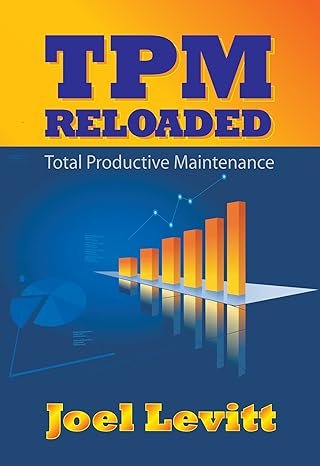
Based on the popular text and the established pillars of TPM. The goal is to recruit operators into maintenance activities.
Add Industry : Any industry where there are operators of the assets and they are available for basic maintenance tasks.
Who : Unlike almost any other maintenance strategy, TPM is primarily housed within the operation group, so full participation from operations at all levels is essential.
The other unique aspect is that while TPM is driven by top management, it is primarily an operations worker effort. The direct manufacturing workers need to be trained in their new roles. Besides, maintenance supervisors, managers, PM leads, PM workers should attend because they will serve as facilitators and trainers. Your in-house experts can conduct shorter training (after we train them and supply them with suitable training materials).
What : This course is offered in a variety of formats for different audiences. The student receives a spiral workbook and the text Lean Maintenance by Joel Levitt
TPM draws in the entire workforce and has a powerful impact on the plant’s complete output. The most challenging lesson is how to keep TPM going after the initial roll-out. One of the keys presented here is a comprehensive understanding of what to do, why to do it, and what’s in it for the worker.
There is much to know to design productive TPM activity for different types of equipment. In a short time, this course will bring an entire department to a deeper understanding of how to make TPM more effective.
Specific Benefits from this TPM training
This course is available in a long program (3-day as shown immediately below suitable for candidates wanting set-up TPM, to be TPM trainers or want to see the whole picture) and short program’s for operations and maintenance personnel
In the following agenda:
RED – are interactive exercises of various types
My action Plan
The course is available in 1, 2, or 3-day configurations
We are flexible about your specific needs for outcomes from the course.