Various studies estimate that there are between 10 and 17 million meetings on an average day in the United States, totaling more than 3 billion per year. A meeting between several managers or executives may cost upwards of $1,000 per hour in salary alone.
All these meetings, yet managers, supervisors, engineers, and workers agree that many of them are a waste of time. Do you ever get frustrated with getting called to attend meetings that seem to waste too much time? Do you ever wish you could do something about it?
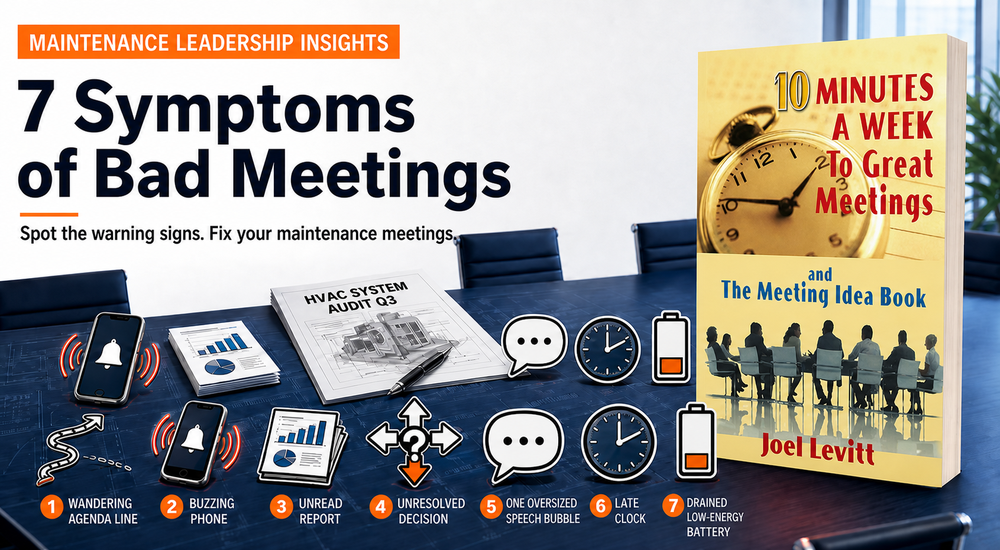
Some Symptoms to Look For
1. Do certain meetings ramble on, lack a clear purpose, lack an agenda, or have an agenda that nobody follows?
Good meeting practice says that a specific agenda reduces wasted time in meetings. A poll of 471 management leaders found that 90 percent attributed the failure of most meetings to a “lack of advanced planning and organization.” Not only is an agenda important, but empowering people to point out when the meeting strays from it can be essential, too.
2. Did you ever notice people doing their own thing during the meeting: texting, talking on the phone, responding to email, carrying on unrelated conversations?
One way to avoid this is to establish ground rules before the meeting begins. Ground rules are the rules and regulations people agree on. Rules could include limits on texting, emailing, and telephone conversations, as well as prohibiting off-board conversations, etc. People may need to be reminded of the ground rules at the beginning of the meeting or during the course
3. Is it common that people are not prepared – they have not read the report, document, spreadsheet that the meeting was about, or have not done the research they promised?
A well-run organization holds staff members accountable for performing their duties and fulfilling their commitments. People have roles in any organization, and often, others rely on them to fulfill what they said or promised. Meetings are often places where people are expected to report on their work, share information, and so on. When members fail to do what is expected of them, they waste the time of others who have come to the meeting to learn about the progress made. Holding people accountable could be part of the ground rules.
4. Are decisions discussed but not decided? When decisions are made, do people continue to fight them, disavow them, or badmouth them afterward?
A good business process ensures essential activities are completed with minimal waste. A good meeting process requires decisions or requires that the topic be continued to the next meeting. If a decision still can’t be made, it may need to be referred to a higher authority or assigned to a sub-group.
The second issue is that after everyone has had their say and decisions are made, the decision needs to be supported by the whole group, even if some disagree—special exception: where the decision is illegal, immoral, or dangerous.
5. Are your meetings dominated by a few talkers (not necessarily the leader)? Conversely, are there knowledgeable people who are never heard from?
Facilitation can improve the process and outcome of meetings. According to an article in the Fall 2006 issue of The Facilitator newsletter, using a skilled meeting facilitator increases project productivity by 25%. Of course, they might have a bias, but having someone with training in meeting facilitation would probably improve most meetings.
6. Do people come late, or come and go? Do meetings start late and end late?
Integrity – consider the integrity of the steel beams in a building. If one or more were missing, wouldn’t the building sag or fall down? The integrity of your work group or team is undermined when key people are missing, whether due to being late or leaving early. They might miss important communications or waste everyone else’s time when they have to be brought up to date.
7. Did you ever leave a meeting with a headache or feeling excessively tired? Do you usually leave certain meetings angry, frustrated, or depressed?
Is your meeting style healthy for you? Do you sit down with donuts, coffee, soft drinks, bagels, and other foods that spike your blood sugar, only to cause it to crash? Are meetings longer than necessary, or are they running without breaks? Are you holding the wrong type of meeting at any time of day? Consider the logistics of the meeting to determine if your meetings help or hinder the organization’s work.
Industry Week magazine estimates that meetings waste 37 billion dollars a year in the US alone. Some of that money is being wasted on your organization! You can read more about this in 10 Minutes a Week to Great Meetings by Joel Levitt, available at www.MaintenancePublishing.com